Why Does Trauma Affect Relationships So Deeply?
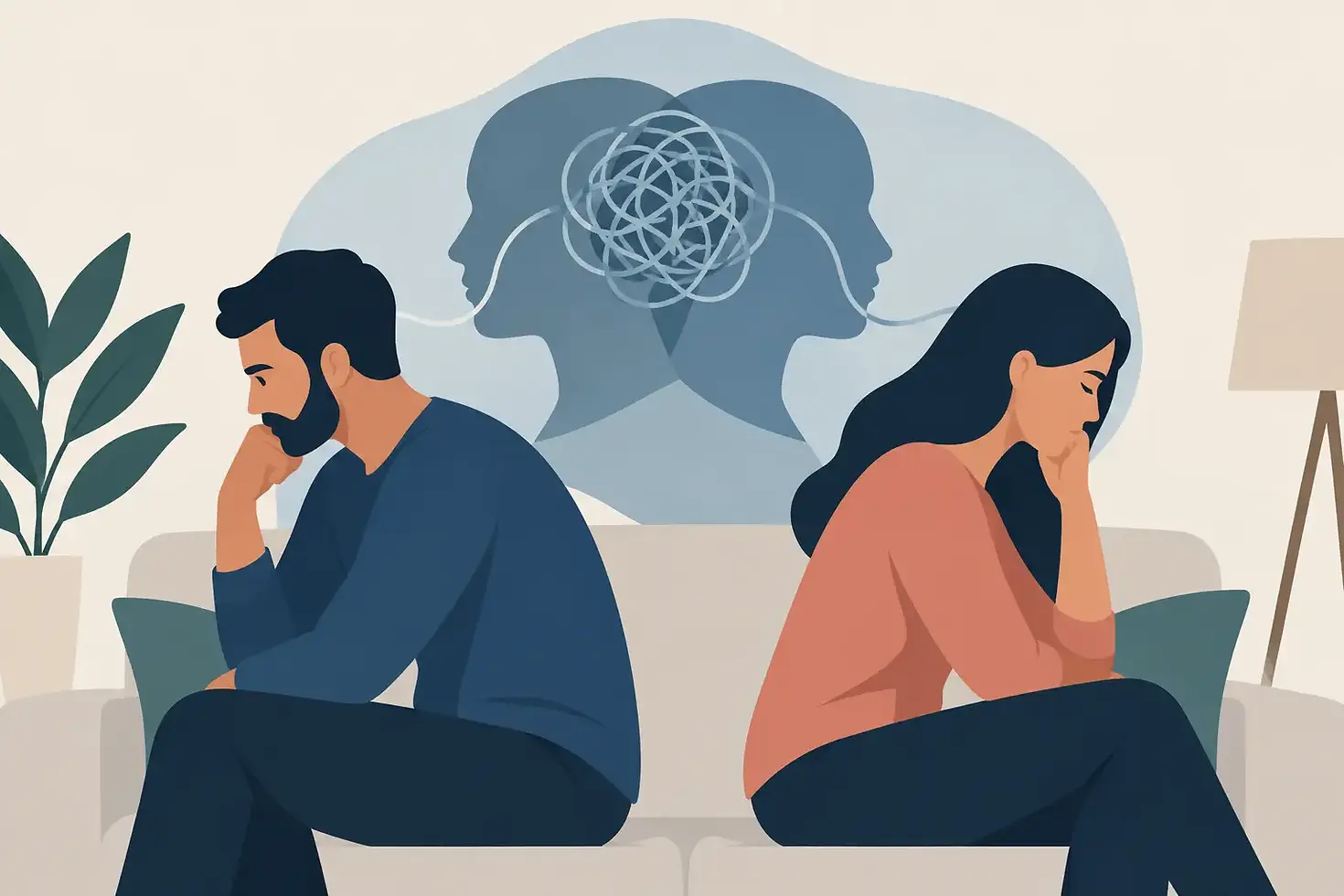
A partner asks, “What’s wrong?” and you suddenly go quiet, feel irritated, or need to leave the room. A friend takes longer than usual to text back, and your body reacts as if you have been abandoned. These moments can be confusing, especially when you deeply want connection. Why does trauma affect relationships? Because trauma can teach the nervous system that closeness, conflict, dependence, or even calm may not be safe.
This is not a character flaw. It is not proof that you are too much, difficult to love, or incapable of healthy relationships. Trauma responses are protective adaptations that helped you survive something overwhelming. Healing often involves gently helping your mind and body recognize that the present is different from the past.
Why Does Trauma Affect Relationships?
Trauma is not defined only by what happened. It is also shaped by how alone, powerless, unsafe, or unsupported a person felt while it was happening. Experiences such as abuse, neglect, betrayal, violence, discrimination, medical trauma, loss, addiction in the family, or unpredictable caregiving can change how a person reads connection.
Relationships require vulnerability. They ask us to trust another person, communicate needs, tolerate uncertainty, repair after conflict, and let ourselves be seen. For someone whose safety was disrupted, those ordinary parts of intimacy can activate old survival patterns.
The nervous system does not always distinguish between a current disagreement and a past threat. A raised voice, a disappointed facial expression, a change in tone, physical distance, or a delayed response can carry more meaning than the moment itself seems to warrant. The reaction may be intense because the body is responding to what it learned before, not only to what is happening now.
This is why insight alone may not make the pattern disappear. You may know your partner is not the person who hurt you and still feel panic, numbness, anger, or shame. Trauma-informed healing makes room for both truths: your reaction is understandable, and you can build new ways of responding.
Survival Responses Can Show Up Between People
When people think of trauma, they often picture fear or panic. But trauma can appear in relationships in quieter and more complicated ways. A person may become overly self-reliant, struggle to receive care, apologize constantly, or feel responsible for everyone else’s emotional comfort.
Fight: Protecting Yourself Through Anger or Control
The fight response can look like defensiveness, irritability, criticism, or a strong urge to prove your point. Sometimes anger is the emotion that feels safest because it creates distance from more vulnerable feelings, such as fear, hurt, or longing.
This does not mean every expression of anger is trauma-driven, nor does it excuse harmful behavior. It can, however, offer a compassionate starting point for understanding what the anger is trying to protect. Beneath the argument may be a nervous system saying, “I cannot be powerless again.”
Flight: Creating Distance Before You Can Be Hurt
Flight may show up as withdrawing, staying busy, changing the subject, ending relationships quickly, or avoiding difficult conversations. Some people leave physically. Others leave emotionally while remaining in the room.
Distance can bring immediate relief, particularly if closeness once came with pain or unpredictability. The trade-off is that repeated avoidance can make repair and intimacy harder over time. Learning to take a regulated pause, rather than disappearing completely, can create more safety for everyone involved.
Freeze and Fawn: Going Quiet or Losing Yourself
Freeze can feel like shutting down, going blank, feeling numb, or being unable to find words during conflict. A person may later think, “I knew what I wanted to say, but I could not say it.” This is not a lack of caring. It can be a protective nervous system response.
Fawning, sometimes called appeasing, may look like agreeing when you do not agree, minimizing your needs, overexplaining, or working very hard to prevent someone else from being upset. It often develops when keeping others calm once felt necessary for safety. In adult relationships, it can lead to resentment, exhaustion, and the painful feeling of not being known for who you truly are.
Trauma Can Change the Meaning of Trust
Trust is often described as a decision, but for trauma survivors, trust is also an embodied experience. You may logically believe someone is safe while your body remains watchful. You may scan for subtle signs that their warmth will disappear, that they will become controlling, or that you will be rejected once you have a need.
This can create patterns that are hard to explain to a partner or loved one. You might test whether they will stay, expect them to disappoint you, or feel uncomfortable when they are consistently kind. Calm can feel unfamiliar. In some cases, familiar instability may even feel more recognizable than reliable care.
Trauma can also affect boundaries in opposite ways. Some people build rigid boundaries that keep nearly everyone out. Others have trouble recognizing or holding boundaries because they learned their needs would be ignored, criticized, or punished. Healthy boundaries are not walls or demands. They are clear information about what helps you remain safe, connected, and respectful of yourself.
Conflict May Feel Like a Threat Rather Than a Problem to Solve
Most close relationships include misunderstandings. In a secure environment, conflict can be uncomfortable without signaling danger. But if past conflict involved yelling, withdrawal, violence, manipulation, or humiliation, a disagreement can feel catastrophic.
A person may assume that tension means the relationship is ending. They may need immediate reassurance, become highly focused on a partner’s mood, or shut down before the conversation is complete. Another person may become intensely independent and insist they do not need anyone. Both responses can be attempts to avoid the pain of disconnection.
The goal is not to eliminate conflict. It is to build the capacity to move through conflict with more choice. That may mean naming when you are activated, asking for a brief break with a specific time to return, or saying, “I want to talk about this, but I need a few minutes to settle first.” Repair becomes possible when both people can slow the cycle down.
Healing Does Not Require Perfect Relationships
Trauma recovery is not about becoming endlessly calm, agreeable, or unaffected by others. It is about developing greater awareness, self-trust, and flexibility. You can notice when an old wound has been touched without treating yourself as broken for having a reaction.
Start with small, honest questions: What happened in my body just now? What story did my mind make about this moment? What do I need before I respond? Sometimes the answer is grounding, rest, space, reassurance, movement, or support from a trusted person. Sometimes it is recognizing that a boundary has genuinely been crossed.
It also helps to distinguish between a trigger and a warning sign. A trigger is a present experience that activates an old survival response, even when current danger is limited. A warning sign is information that something in the current relationship may be unhealthy or unsafe. Both deserve attention. Trauma-informed care does not ask you to ignore your instincts. It helps you explore them with care, context, and support.
What Support Can Look Like
Healing in relationship often includes practicing new experiences of safety over time. This might involve communicating one need clearly, receiving care without immediately minimizing it, or staying present for a difficult conversation in manageable pieces. Progress is rarely linear. A meaningful relationship can still have ruptures, and a healing process can include setbacks.
Therapy can offer a confidential, collaborative space to understand these patterns without shame. Evidence-based, trauma-informed therapy can support emotional regulation, relationship skills, grief work, boundary-setting, and deeper reconnection with the parts of yourself that learned to survive. For some people, couples therapy or family therapy may also be helpful when all participants are safe and willing to engage honestly.
The right pace matters. Pushing yourself to disclose everything quickly or remain in situations that overwhelm you is not the same as healing. Safety, choice, and consent are central to trauma-informed work.
You are allowed to want relationships that feel steady, respectful, and real. Each time you respond to yourself with curiosity instead of criticism, you create a little more room for the connection you have been longing for.


Comments